



The High-Stakes Demands of EV Battery Assembly
EV battery assembly is unforgiving. Thermal interface materials must be applied in a precise, void-free bead so every cell makes consistent contact with the cooling plate — too little and you get hot spots, too much and you waste expensive material and add unneeded weight. Structural adhesives and cell-to-pack bonding demand exact placement at cycle times that keep pace with a moving line.
But there's a harder problem underneath: TIMs are brutally abrasive. They're heavily filled compounds that grind down standard dispensing equipment fast — driving up maintenance, downtime, and inconsistent output as worn components drift out of spec. Getting a clean bead once on a bench is easy. Doing it reliably at production volume, with materials that are actively destroying your hardware, is the real engineering challenge.
That's the problem our systems are built to solve.
Designed Around Abrasion Resistance & Line Speed
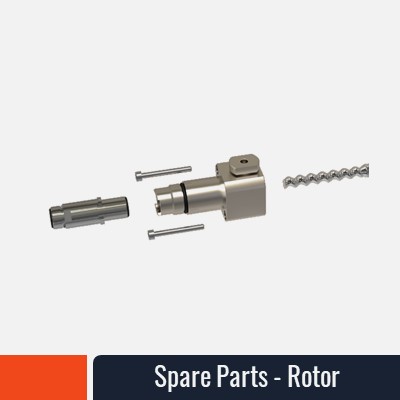
Tungsten Carbide Rotor Running at Low RPM
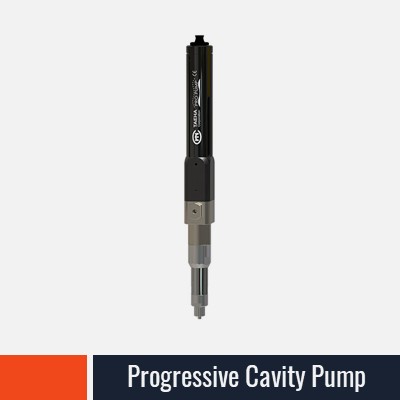
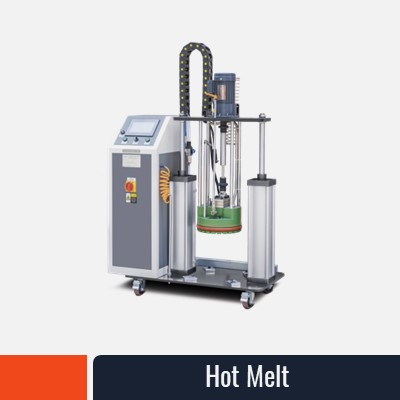
At the core is a tungsten carbide rotor running at low RPM. Tungsten carbide is dramatically harder and more wear-resistant than standard components — so it stands up to abrasive thermal fillers where softer parts wear out. Running at low RPM further reduces wear and shear on both the hardware and the material, protecting the compound and holding a consistent, repeatable output over long production runs.
System Specifications
| Specification | Detail |
|---|---|
| Wetted components | Tungsten carbide rotor — abrasion-resistant, low-RPM operation |
| Dispense accuracy / repeatability | ±1% |
| Throughput / cycle time | Production line volume matching (up to 500 mm/sec dispense speed) |
| Material types | Thermal interface materials, structural adhesives, sealants; 1K & 2K |
| Viscosity range | 1 to 1,000,000 cP |
| Bead / dot size range | Micro-dots to high-flow continuous beads |
| Meter-mix ratio (2K) | 1:1 to 10:1 continuous ratio control |
| Integration | Inline conveyor / robotic cell / gantry system integration |
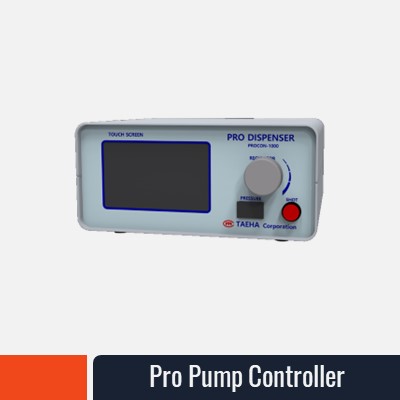
| Control system | PLC / Fieldbus / Ethernet/IP integration |
Materials & Applications Handled
- Thermal interface materials / gap fillers — including heavily filled, abrasive compounds
- Structural and cell-to-pack bonding adhesives
- Battery pack enclosure sealants and perimeter gaskets
- One-component (1K) and two-component (2K) meter-mix chemistries
Cell-to-Pack & Module Dispensing
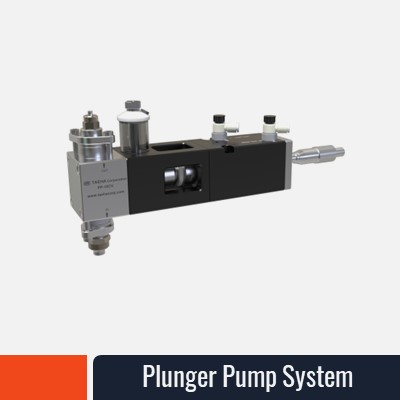
Whether dispensing 1K thermal greases into module housing channels or continuous 2K polyurethane structural adhesive beads across cell arrays, our progressive cavity systems deliver non-pulsating flow with instantaneous start/stop control.
Key System Benefits
Built to Survive Abrasive TIM
A tungsten carbide rotor and low-RPM operation resist the abrasion that wears out conventional equipment — meaning longer service life, less downtime, and consistent dispensing over time.
Consistent Thermal Performance
Void-free, uniform beads mean reliable cell-to-cooling-plate contact and fewer thermal defects across every pack.
Lower Material Cost
Precise volumetric control eliminates over-application of expensive thermal and structural gap fillers.
Production-Volume Throughput
Engineered to keep pace with high-speed EV assembly lines without sacrificing volumetric accuracy.
Reduced Scrap and Rework
Repeatable bead placement and shot volume, shift after shift, protecting yield in cell-to-pack operations.
How It Integrates
Our EV battery dispensing units are engineered to drop directly into existing or new battery assembly cells with minimal integration friction. The system supports both inline conveyor stations and robot-mounted end-of-arm tooling configurations. Featuring a compact pump footprint, light wetted mass, and standardized mounting interfaces, it connects seamlessly with line PLCs via Ethernet/IP, Profinet, or discrete I/O protocols to synchronize bead dispensing rate directly with robot motion speed.
Proven Downtime Reduction on Battery Lines
Tier-1 EV suppliers switching to our tungsten carbide progressive cavity systems cut maintenance downtime significantly and eliminated thermal gap filler volume drift while maintaining uniform bead geometry across multi-shift battery pack assembly operations.
Experience Behind the Engineering
Gavin Petersen has spent 30+ years in industrial fluid dispensing, including senior roles at Graco. Abrasive thermal interface materials are the problem he's asked to solve most often as EV programs ramp — the tungsten carbide, low-RPM approach is what three decades of worn-out rotors points to.
Learn more about our experience