






The Benefits of Keeping Your 1K and 2K Materials Under Vacuum During Dispensing
Introduction
Many dispensing problems — voids in parts, inconsistent shot weights, or quality issues at startup — come from what happens to the material before it reaches the dispense valve.
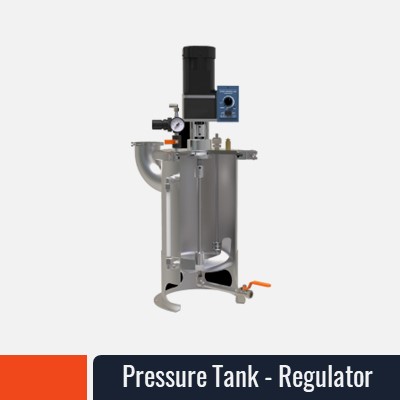
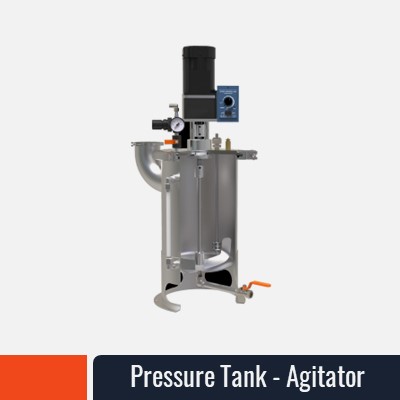
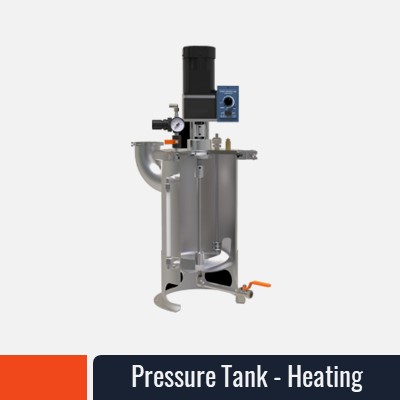
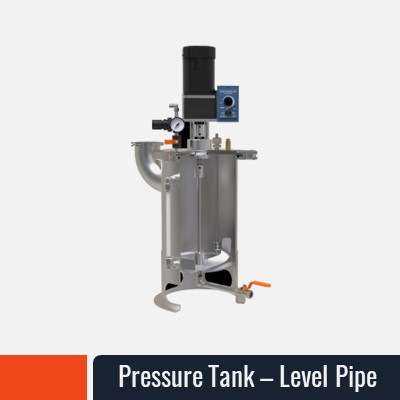
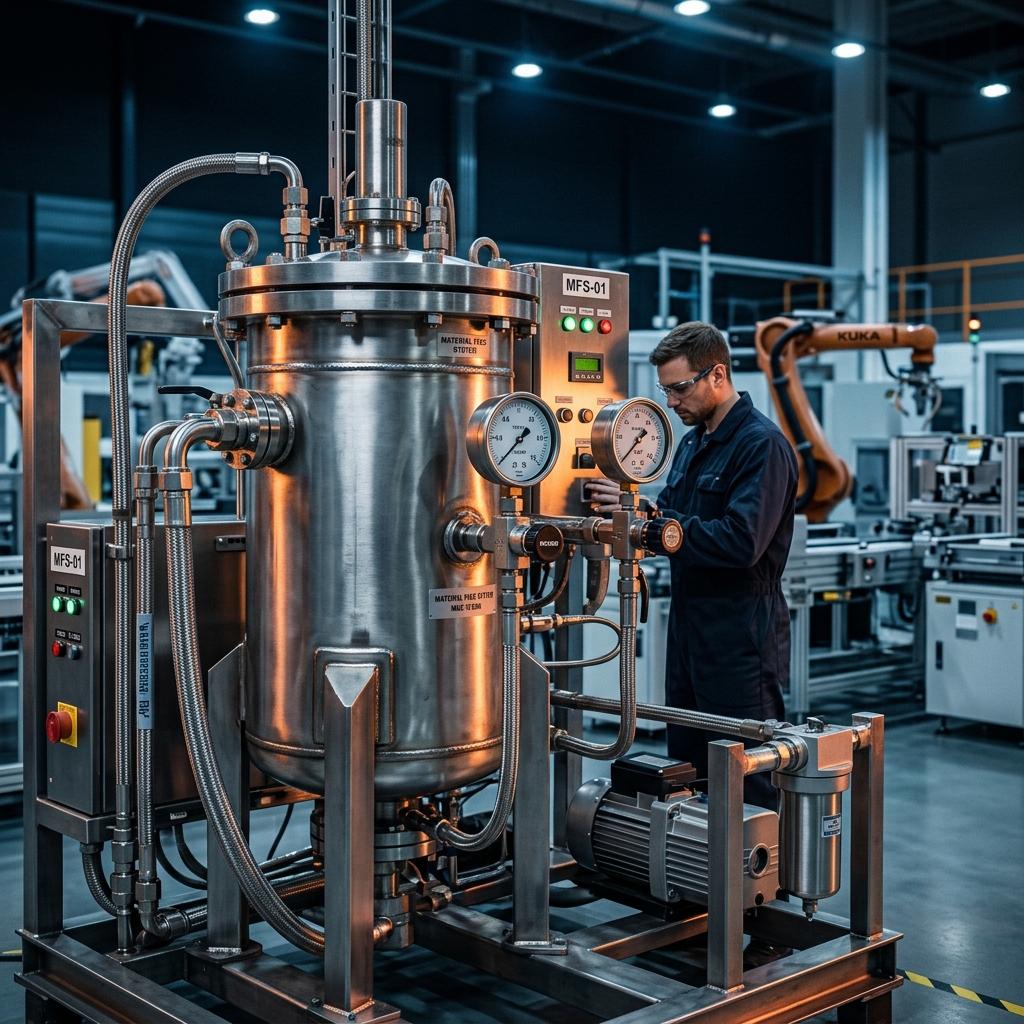
Keeping your one-component (1K) or two-component (2K) materials under vacuum in the reservoir and feed system is one of the most effective ways to improve consistency and reduce defects. Here's why it matters and what benefits you actually see on the line.
Viscosity variation from drum-to-drum compounds these problems — why positive displacement handles it and time-pressure doesn't explains why material consistency matters from the reservoir forward.
1. Removes Entrained Air Before It Reaches the Part
Tiny air bubbles that get mixed into the material during drum changes, transfers, or recirculation can cause voids and pinholes after the material is dispensed and cured.
Continuous vacuum in the reservoir pulls these suspended bubbles out of the material before it travels downstream. The result is cleaner dispense shots and fewer internal voids in potting or encapsulation.
This is especially critical if you are potting or encapsulating electronic components — air bubbles trapped in cured potting compound can lead to product failure through thermal isolation, dielectric breakdown, or mechanical stress at the void boundary.
2. More Consistent Shot Weights and Mix Ratios
Air in the material affects volume. In 2K systems, even a small amount of entrained air in one component throws off the intended mix ratio.
Vacuum removes that air so the metering system delivers the actual material volume you expect. You get more repeatable shot weights and better chemistry every time.
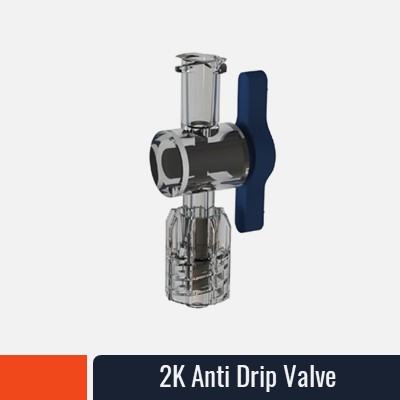
In 2K systems, pairing vacuum feed with an anti-drip valve at the dispense point controls the material at both ends of the process.
3. Cleaner and Faster Drum Changeovers
Switching drums often introduces air into the feed lines. Under vacuum, you can connect a new drum without breaking the sealed environment. This keeps air out during changeover and reduces the number of bad first shots after a drum swap.
4. Helps Maintain Stable Viscosity
Temperature changes and material movement can affect how the product flows. Vacuum combined with simple temperature control keeps the material at a more consistent condition from the first shot of the shift to the last.
5. Reduced Material Waste and Scrap
Fewer voids, fewer pinholes, and more consistent dispensing mean less rework and scrap — especially important when you're working with higher-cost 1K or 2K adhesives and sealants.
A Quick Note on Moisture
For moisture-sensitive materials, vacuum can provide additional protection by limiting contact with the atmosphere. However, most moisture issues are already well managed with standard practices like sealed hoses, desiccant dryers, and nitrogen blanketing.
When Vacuum Makes the Biggest Difference
Vacuum in the material feed system is especially useful when you:
- See recurring voids or pinholes in your parts
- Notice quality variation after drum changes or startup
- Run 2K systems where mix ratio and pot life are critical
- Want to reduce material waste on higher-value products
The Bottom Line
Keeping your 1K or 2K material under vacuum is a simple upstream change that delivers downstream results: cleaner dispense, more consistent performance, and less scrap.
It's not the only thing you need for a good process, but it removes one of the most common hidden variables in adhesive and sealant dispensing.
If you're tired of chasing air-related defects, a vacuum-based material feed system is worth evaluating for your application.
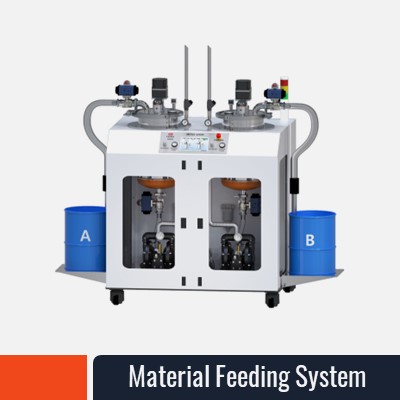
Explore the Dispense Robotics MFS Material Feed System range or contact us to see if it fits your process.
Gavin Petersen of Dispense Robotics has spent 30+ years in industrial fluid dispensing, including senior roles at Graco. He works directly with manufacturing engineers to diagnose dispensing process failures and specify the right automation.