


| Component | Est. Loss / unit | Qty | Subtotal |
|---|---|---|---|
| Dispense Gun | 400 psi / 27.6 bar | 27.6 bar | |
| Nozzle / Tip | 300 psi / 20.7 bar | 20.7 bar | |
| Swivel Joint | 200 psi / 13.8 bar | 0 bar | |
| Fitting / Valve | 200 psi / 13.8 bar | 0 bar |
Component estimates are industry rule-of-thumb values from SAE dispensing practice for high-viscosity systems. Actual losses vary by product — contact Dispense Robotics for application-specific data.
What Is Pressure Drop in a Dispensing System?
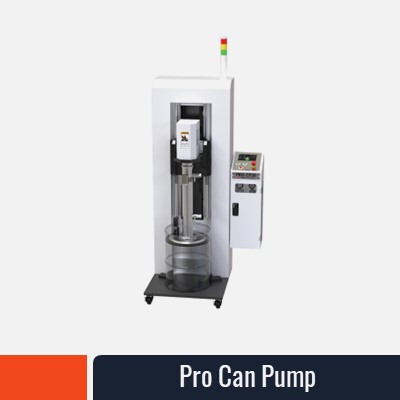
Pressure drop is the reduction in fluid pressure as material travels from the pump outlet to the dispense tip. Every metre of hose, every fitting, every valve, and every vertical rise consumes pressure. The pump must produce enough pressure to overcome all of these losses and still deliver the required flow at the nozzle.
In a typical industrial dispensing system — a heated hose feeding an automated dispensing robot — hose friction loss is the dominant term, particularly for high-viscosity materials like structural adhesives, silicones, or thermal interface compounds. Underestimating system pressure drop is one of the most common causes of pump under-specification in new installations.
The calculation is based on the Hagen-Poiseuille equation, which describes laminar viscous flow in a circular tube. At the flow rates and viscosities typical of dispensing systems, flow is almost always laminar, making the equation accurate without empirical correction factors.
How Hose Diameter and Viscosity Affect Pressure
The Hagen-Poiseuille equation has one critical non-linearity: pressure drop scales with the fourth power of the tube diameter. Halving the hose bore increases pressure drop by a factor of 16. A small reduction in hose inner diameter — from material build-up, incorrect specification, or temperature-driven viscosity change — can dramatically increase system pressure requirements.
Viscosity has a linear effect: doubling viscosity doubles pressure drop. For heated systems, pump start-up pressure before the material reaches operating temperature can be significantly higher than steady-state. The pump must handle that cold-start pressure without damage.
Flow rate also scales linearly. If your throughput target doubles, hose pressure drop doubles — so it's worth calculating at both current and future production rates when specifying a system.
Understanding Each Term in the Pressure Calculation
Hose Friction Loss
Usually the largest contributor. Calculated independently for up to three hose sections, accommodating different bore diameters between the pump, heated hose, and whip hose to the gun. Each section accepts its own viscosity to account for temperature differences along the run.
Component Losses
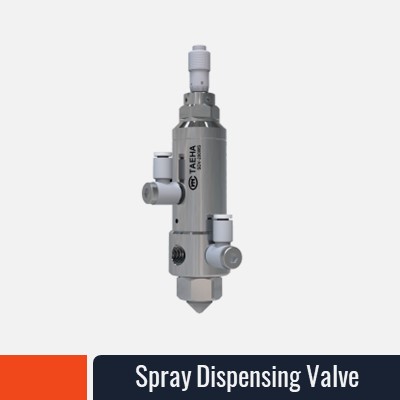
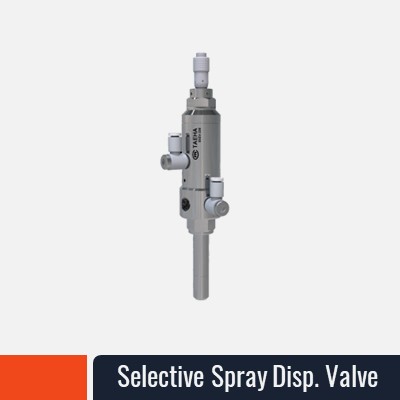
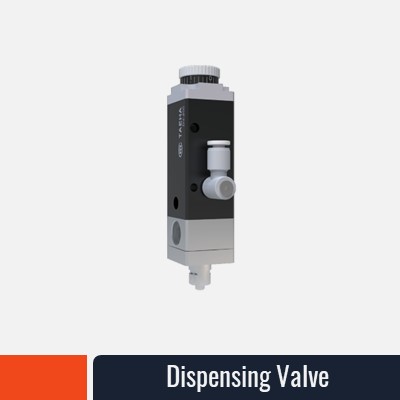
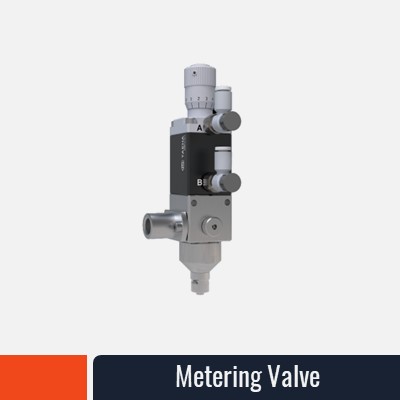
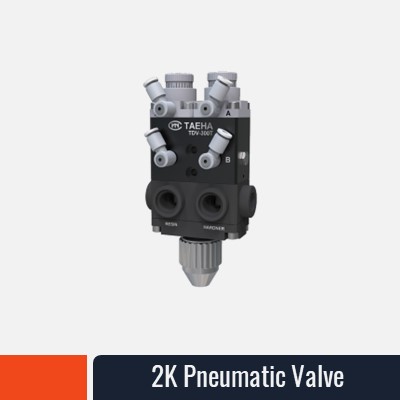
Dispense guns, nozzle tips, swivel joints, and inline valves all create pressure drop. Values used here are SAE industry estimates for high-viscosity systems: 400 psi for guns, 300 psi for nozzle tips, 200 psi for swivels and fittings. Contact Dispense Robotics for component-specific data.
Vertical Head & Safety Margin
Elevation adds hydrostatic pressure: ΔP = SG × ρ × g × h. A 25% safety margin is applied before the pump recommendation to account for viscosity variation, start-up conditions, and system ageing. For critical applications, consider 40–50%.