





Beyond Time-Pressure Dispensing Limitations
If you're searching for progressive cavity dispensing, you've probably already lost patience with time-pressure systems — and you already know why. Time-pressure doesn't meter material; it meters time, and hopes the material cooperates. Viscosity shifts with ambient temperature, with batch variations, with material age, and every single shift changes the shot weight.
The question isn't whether volumetric dispensing is more accurate. It's how to specify the right system: what displacement, what rotor and stator materials, what speed, 1K or 2K, and how the pump gets fed. That's what this page covers.
How Progressive Cavity Dispensing Works
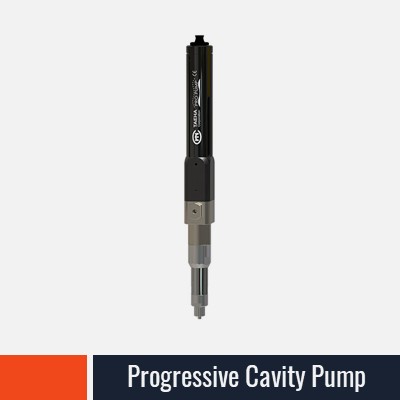
A helical rotor turns inside an elastomer stator. The geometry creates a chain of sealed cavities — all the same volume — that move continuously from inlet to outlet as the rotor turns.
Output = Displacement × Speed
Flow rate is set strictly by cavity geometry and rotational speed — Q = displacement × rpm — not by pressure and hope. Viscosity, temperature, head pressure, and batch variation do not change cavity volume.
No Metering Break
The rotor generates suction on one side and pressure on the other simultaneously, so the pump dispenses continuously — dots, beads, or uninterrupted flow — without stopping to refill.
Clean Shot Cut-Off
Reverse the rotor briefly at the end of a shot (suck-back) and the bead breaks cleanly. Liquid stringing and post-dispense dripping are completely eliminated.
System Specifications
| Specification | Detail |
|---|---|
| Metering principle | Progressive cavity — positive displacement, volumetric |
| Displacement range | 0.005 to 50 ml/rev across the pump range |
| Minimum dose | Down to 0.00005 ml/sec (smallest pump) |
| Viscosity range | 1 to 1,000,000 cP |
| Specific gravity range | 0.9 to 3.5 (speed derated above SG 1.5) |
| Rotor options | Hard-chrome stainless (standard) · tungsten carbide (abrasive/filled) · zirconia ceramic or PP (metal-free, for anaerobics) |
| Stator options | FEPM (standard) · FFKM (aggressive chemistries) · EPDM · TPE |
| Configurations | Standard, anti-drip (PDP), module and back-plate-module builds for machine integration |
| 1K / 2K capability | Both — 2K via paired pumps with ratio control |
| Shot accuracy / repeatability | ±1% |
Specifying the Right System for Your Application
1. Displacement
Size the pump so your typical shot uses a sensible rotor rotation at moderate speed. Flow rate Q = displacement × rpm. Calculate flow requirements using our calculator.
Dispensing Volume Calculator →2. Speed vs. Density
Denser, filled materials need slower speeds: up to 60 rpm below SG 1.5, 30 rpm to SG 2.0, and 10 rpm or less above that. This protects both the pump rotor and material structure.
3. Rotor Material
Hard-chrome stainless covers standard fluids. Filled abrasive compounds require tungsten carbide. Anaerobics require metal-free ceramic or PP rotors.
Abrasive Material Guide →4. Stator Elastomer
FEPM is the standard — best mechanical properties, good chemical coverage, -4 °C to 230 °C. FFKM buys wider chemical resistance where aggressive solvent systems demand it.
5. Feeding the Pump
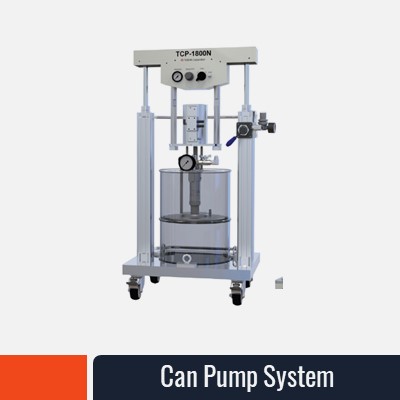
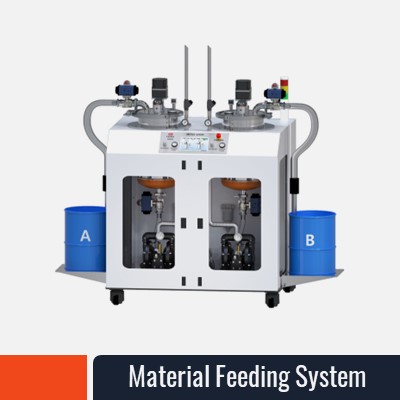
A metering pump is only as good as the material reaching it. Cartridges, pails, or drums — sized so 2K components deplete together — with vacuum feed where entrained air is the enemy.
Container Sizing Tool →Key Engineering Benefits
Shot-to-shot consistency you can audit
Volumetric output means process validation gets simpler: the pump either turned the programmed rotation or it didn't.
One principle, your whole materials list
From 1 cP UV resin to 1,000,000 cP paste, the same metering physics applies — change displacement and wetted parts, not the core technology.
Low shear fluid handling
Continuous cavities at low rpm move the material gently without working it — no property changes, no heat generation, no damaged micro-fillers.
No drift as equipment ages
With the right wetted parts for the material, cavity geometry — and therefore shot size — holds over the pump's long service life.
Proven Defect & Scrap Reduction
Transitioning from pneumatically driven valve setups to progressive cavity volumetric metering eliminates fluid-drift scrap, achieving up to 60–80% defect reduction on high-value electronic and automotive assembly lines.
Experience Behind the Engineering
Gavin Petersen has spent 30+ years in industrial fluid dispensing, including senior roles at Graco. Progressive cavity metering is the technology he specifies when a customer's scrap rate traces back to viscosity variation — which, after three decades of process audits, is most of the time.
Learn more about our experience