





The 3 Viscosity Factors That Still Break Time-Pressure Dispensing — And Why Positive Displacement Doesn't Care
If you run any kind of precision dispensing line — adhesives, sealants, epoxies, thermal compounds, potting materials — you already know viscosity is never constant.
Most of us learned this the hard way. You dial in the perfect pressure and time on Monday, then spend the rest of the week chasing defects because the material decided to change on you.
There are exactly three things that drive viscosity variation on the production floor. Time-pressure systems fight all three. Positive displacement (progressive cavity) pumps simply ignore them.
Here they are.
1. Temperature
A 5 °C shift in ambient or material temperature can change viscosity by 20–50% on many 1K and 2K materials.
Your plant heat, seasonal changes, or even the heat generated by the dispense valve itself will move the needle.
Time-pressure has to chase that moving target with pressure adjustments. Most of the time it never quite catches up.
2. Batch-to-Batch Variance
The drum that came in this morning is not identical to the one from last week.
Suppliers have tolerances. Even the same nominal material from the same vendor can arrive 10–30% different in viscosity.
Time-pressure systems assume every batch behaves exactly like the last one. When it doesn't, you get under- or over-dispensed shots until someone recalibrates.
3. Material Aging
Once the material is in your reservoir or day tank, it starts to change.
Moisture absorption, settling, slight chemical reaction over hours or shifts — viscosity drifts.
By the end of a long run the material you're dispensing is not the same one you characterised that morning.
These three factors are always present. They are not edge cases.
Why Time-Pressure Systems Lose This Fight
Time-pressure works by pushing a fixed pressure for a fixed time. It assumes viscosity is constant.
When any of the three factors above moves, the volume you actually dispense changes.
Result: inconsistent bead size, voids, stringing, nozzle ball-up, scrap parts, and constant recalibration.
We've seen lines lose 2–5% yield every single day because of it.
How Positive Displacement (Progressive Cavity) Changes the Game
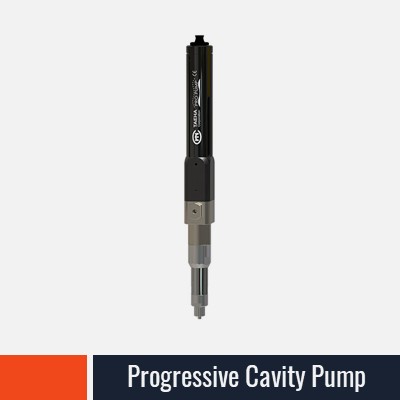
A progressive cavity pump meters by volume, not by pressure or time.
The rotor-stator pair physically traps and moves a precise volume of material forward with every revolution.
Temperature, batch differences, and aging still happen — but they no longer affect the shot size.
You set the volume once and it stays there, even if the material gets thinner or thicker.
- No mid-shift recalibration
- No chasing pressure setpoints
- Clean break at the nozzle
- Consistent results shift after shift
When time-pressure is replaced with progressive cavity on the same application, dispense-related defects and material waste typically fall, because the dispensed volume no longer depends on pressure and viscosity.
Frequently Asked Questions
What is time-pressure dispensing and why is it inaccurate?
Time-pressure dispensing applies a set air pressure for a set duration to push material out of a nozzle. The fundamental problem is that it assumes viscosity is constant — but viscosity changes with temperature, batch variation, and material aging. Any shift in viscosity changes the actual volume dispensed, causing inconsistent shots without any indication that something has gone wrong.
What is a progressive cavity pump in dispensing?
A progressive cavity pump (also called a positive displacement pump) uses a helical rotor turning inside a moulded stator to physically move a precise, fixed volume of material with each revolution. Because the volume is mechanically defined rather than pressure-driven, it is far less sensitive to viscosity changes — making it significantly more accurate than time-pressure for variable-viscosity materials.
What defects does viscosity variation cause in dispensing?
The most common symptoms of viscosity-related dispensing problems include inconsistent bead diameter, voids in underfill or potting, stringing or tailing after shot completion, nozzle ball-up between cycles, and increased scrap rates. These defects often appear gradually across a shift and are frequently misattributed to operator error or equipment wear.
Which dispensing applications benefit most from progressive cavity pumps?
Electronics assembly (BGA underfill, conformal coating), EV battery thermal interface material, medical device potting, filter end-cap adhesive, and any high-mix production line where multiple materials or frequent changeovers make constant recalibration impractical. The higher the material cost or the tighter the bond-joint specification, the faster the ROI on switching from time-pressure.
The Bottom Line
If your process still depends on time-pressure dispensing, you are not fighting bad operators or bad material — you are fighting basic physics that time-pressure was never designed to overcome.
Positive displacement doesn't fight viscosity variation. It simply meters around it.
If you're evaluating dispense systems as a result, how to choose adhesive dispensing equipment covers the full decision — material type, 1K vs 2K, and when positive displacement is the right call.
If this sounds familiar on your lines — electronics assembly, filter manufacturing, medical device potting, EV battery, or any other high-mix adhesive process — contact Dispense Robotics or explore our progressive cavity dispensing systems to see pump sizing data and results from similar applications.
Gavin Petersen is the founder of Dispense Robotics and has spent 30+ years in industrial fluid dispensing, including senior roles at Graco. He works directly with manufacturing engineers to diagnose dispensing process failures and specify the right automation.