

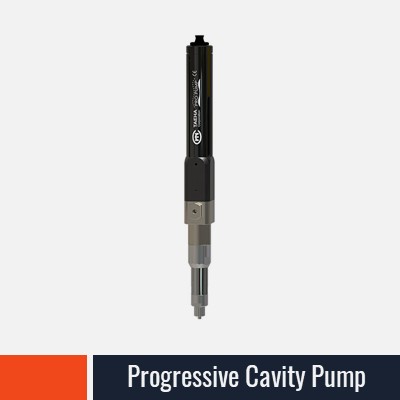
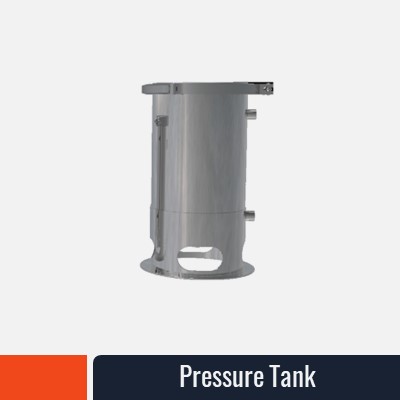
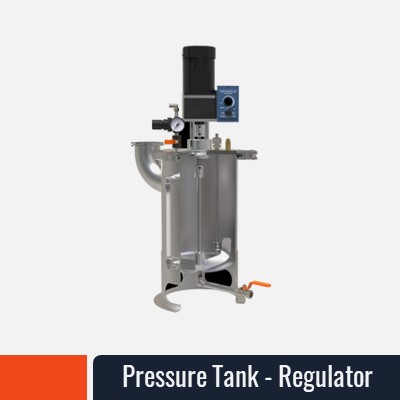
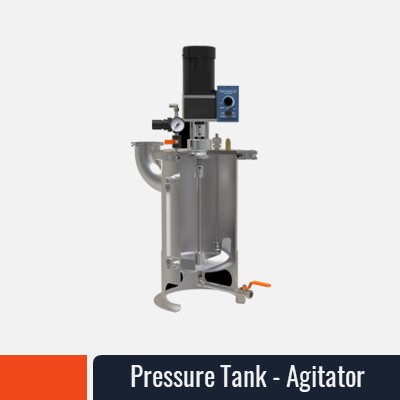
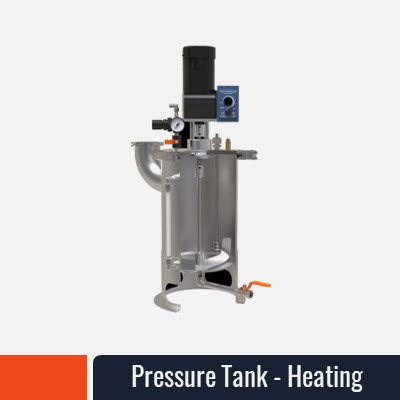
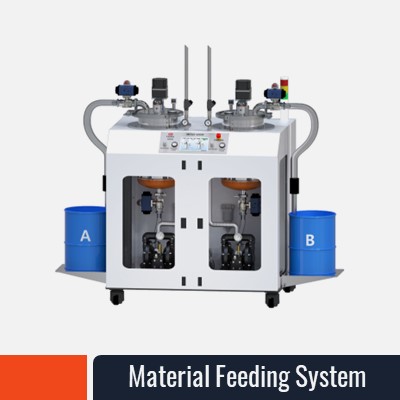
CoolTherm EP-2000 is a two-component thermally conductive epoxy from Parker LORD, rated 1.9 W/m·K, used to pot motor stators, transformer coils and sensors. It is heavy, abrasive and quick to settle, which makes it one of the harder materials to dispense well. Short answer: we dispense it with a Material Feeding System (MFS) with heated, agitated and recirculating tanks feeding a PDP progressive cavity metering pump with tungsten carbide rotors.
Recommended: a Material Feeding System (MFS) with heated, agitated and recirculating tanks feeding a PDP progressive cavity metering pump with tungsten carbide rotors.
Material at a glance
| Manufacturer | Parker LORD |
|---|---|
| Type | Thermal potting / encapsulant |
| Chemistry | Epoxy |
| Thermal conductivity | 1.9 W/m·K |
| Mix ratio | 1:1 by weight or volume |
| Viscosity | @ 60 °C, 10/s: resin 6,080 cP; hardener 1,300 cP; mixed 1,900 cP; working life >3 h @ 60 °C |
| Cure | Handling strength 2 h @ 110 °C; full cure 2 h each @ 120, 150, 180 and 210 °C |
From the manufacturer's published data (source). Always work from the current technical data sheet.
How we dispense it
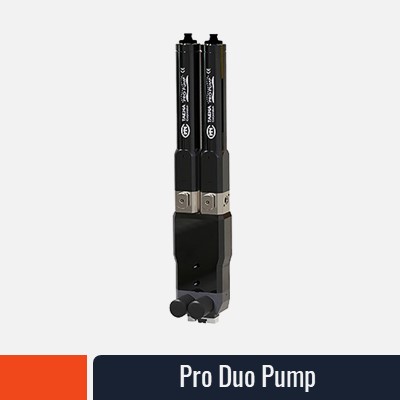
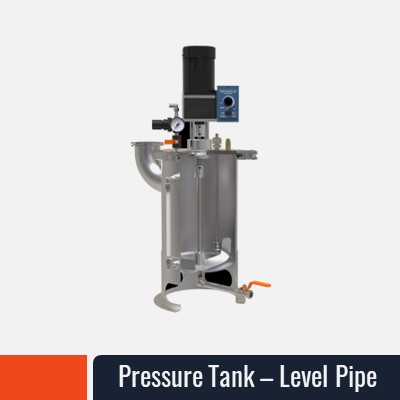
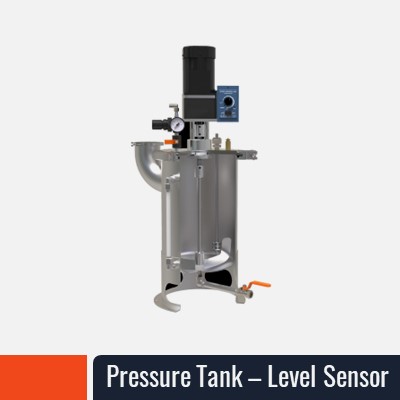
We have engineered and demonstrated a system for CoolTherm EP-2000 in motor stator and coil potting. The material is heavily filled and dense, so the filler settles quickly, and at room temperature it is thick. Our approach: an MFS keeps both sides heated, agitated and recirculating under vacuum, and a PDP two-component progressive cavity pump with tungsten carbide rotors meters it on ratio so pours come out without voids.
- Heat: warming the material to around 60 °C cuts its viscosity sharply, so it flows into tightly packed windings. The MFS heats the tanks, the valves and the lines.
- Settling: this filler drops out fast. Continuous agitation and recirculation all the way to the pump keeps every pour the same.
- Air: vacuum degassing in the MFS removes entrained air before the material reaches the part.
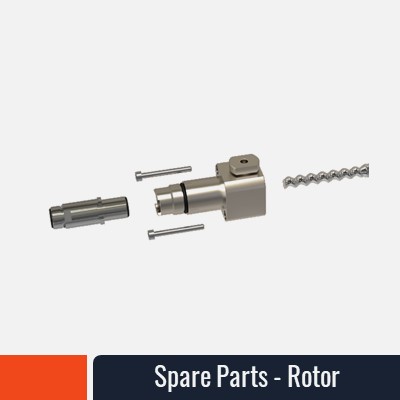
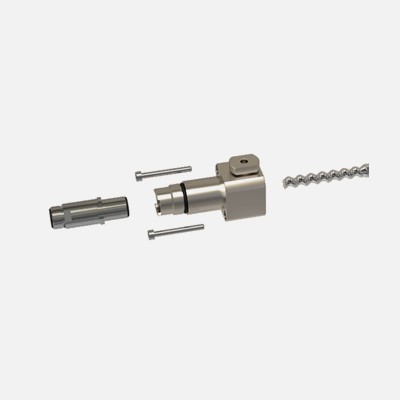
- Abrasion: tungsten carbide rotors, wear-resistant stators and slow pump speeds (8 to 12 rpm) hold up to the filler.
- Ratio: each side is metered to within ±1%. We add inlet and outlet pressure monitoring with alarms, and recommend a weekly weight check per side.
See our PDP two-component metering pumps and the Material Feeding System (MFS), or use the pump configurator.
How the MFS keeps filler in suspension
The Material Feeding System agitates and recirculates the material so heavy filler stays mixed all the way to the pump. Watch how it circulates the product:
Frequently asked questions
What pump should I use to dispense CoolTherm EP-2000?
We have engineered and demonstrated a system for CoolTherm EP-2000 in motor stator and coil potting. Pump size depends on your shot or bead size and cycle time; send us those and we will size it.
Can CoolTherm EP-2000 be fed from pails or drums?
Yes. For production volumes we feed it from bulk containers through a Material Feeding System (MFS), which agitates and recirculates the material so the filler stays in suspension, and degasses it under vacuum.
How do you keep CoolTherm EP-2000 on ratio?
Each side is metered by its own progressive cavity pump, held to within ±1% per side. We recommend a weekly check: weigh a shot from each side and adjust, because filled materials vary from batch to batch.
Will CoolTherm EP-2000 wear out the pump?
Thermally conductive fillers are abrasive. With tungsten carbide rotors, wear-resistant stators and pump speeds of 8 to 12 rpm, stators typically last 6 to 12 months and rotors up to 24 months, and a pump rebuild takes under an hour.
Talk it through with us
Running CoolTherm EP-2000, or about to? Send us the technical data sheet, your bead or shot size and your cycle time, and we'll recommend a pump and feed system. We can run an application test on your material before you buy. Contact us
Related materials
- CoolTherm EP-3500 · Parker LORD, thermal potting / encapsulant
- CoolTherm SC-320 · Parker LORD, thermal potting / encapsulant
- CoolTherm SC-324 · Parker LORD, 2K thermally conductive silicone encapsulant
- DOWSIL TC-6015 Thermal Conductive Encapsulant · Dow, thermal potting
- SilCool TIA216G · Momentive, thermal potting
- SilCool TIA211G · Momentive, thermal potting
All thermal interface materials · Materials we've dispensed
CoolTherm EP-2000 is a trademark of Parker LORD or its affiliates. Dispense Robotics is not affiliated with the manufacturer; the name is used to describe the material our equipment dispenses.