

Choosing the Right Container Size for Your Dispensing System
Introduction
Choosing the correct container size is one of the most important decisions when setting up a dispensing system — and one of the most consistently underestimated.
Most engineers focus on the robot, the valve, and the fluid path. Container sizing gets treated as an afterthought. That usually means either expensive material going to waste because the container was too large, or constant production interruptions because it was too small.
Both problems are avoidable. Here is how to get the size right before you order.
A Story I've Seen More Than Once
I've sat across the table from integrators who had a 55 gallon drum written into the job spec. The drum was on the spec because it gave the best price per kilo. Then you do the math.
Say the line uses about 300 cc of material a day. A 55 gallon drum holds roughly 208 liters. At that rate it takes close to three years of production to empty it. The material on the data sheet has a six-month shelf life.
That drum was never going to be used up. Most of it was going to expire and go in the bin. The better answer was a 1 gallon can or cartridges — a higher price per kilo, and a much lower cost per good part.
Nobody had done anything wrong. They just hadn't asked how long the container would last.
The Shelf Life Problem: When Bigger Is Not Better
Most adhesives, sealants, and other dispensing materials carry a shelf life of around six months from the date of manufacture, though this varies by product.
There are really two clocks running, and both catch people out:
-
Shelf life from manufacture. Material rarely arrives the day it was made. By the time it ships, clears receiving and reaches the line, a month or two of that six months can already be gone.
-
Life after opening. Some materials have a shorter working life once the container is opened, especially anything moisture-sensitive. Check the data sheet; it is often a separate number.
If you select a container that holds more material than you can use in the time you actually have left, the excess will expire before you can dispense it. For specialty materials such as filled thermal interface materials, which can cost hundreds of dollars per kilogram, this is a significant cost problem. Once expired, the material goes in the bin.
The instinct to buy in bulk to get a better price per unit is understandable. But if the bulk quantity sits longer than the shelf life allows, the unit economics reverse: you are paying for material you cannot use.
The Changeover Problem: When Smaller Is Not Better
The opposite error is equally costly, just in a different way.
If you choose containers that are too small for your production volume, you will be changing them frequently — potentially multiple times per shift. Every container changeover takes the system offline, requires operator time to load and prime the new container, and interrupts production flow.
More importantly, every container change is an opportunity for air to enter the fluid path.
The Hidden Risk: Air Ingestion During Container Changes
Air in a dispensing system causes inconsistent shot volumes, voids in bonds or potting, and erratic bead profiles. For critical applications — electronics underfill, medical device bonding, structural adhesive joints — a single air bubble in a dispense can cause a part failure.
Constantly swapping out small 50 cc dual cartridges throughout a shift is a practical example of this problem. Each swap creates a moment where air can enter the tip of the cartridge or the mixing nozzle. Do this five or ten times a shift, and you are introducing systematic air ingestion risk into a process that requires consistent dispensing without voids.
The right container size is large enough that you are changing it infrequently — but not so large that material expires before you use it.
How to Calculate the Right Container Size
The correct approach is to work backwards from your actual consumption:
-
Know your dispense volume — how many milliliters (or grams) does each dispense cycle use? Be clear which one. For filled materials with a high specific gravity, cc and grams are very different numbers.
-
Know your production volume — how many parts do you run per shift, and how many shifts per week?
-
Know the shelf life you actually have — the time left on the material when it reaches your line, and its life once opened.
-
Size the container so that one unit is fully used within that time at your real production rate, without forcing changeovers every hour.
A worked example
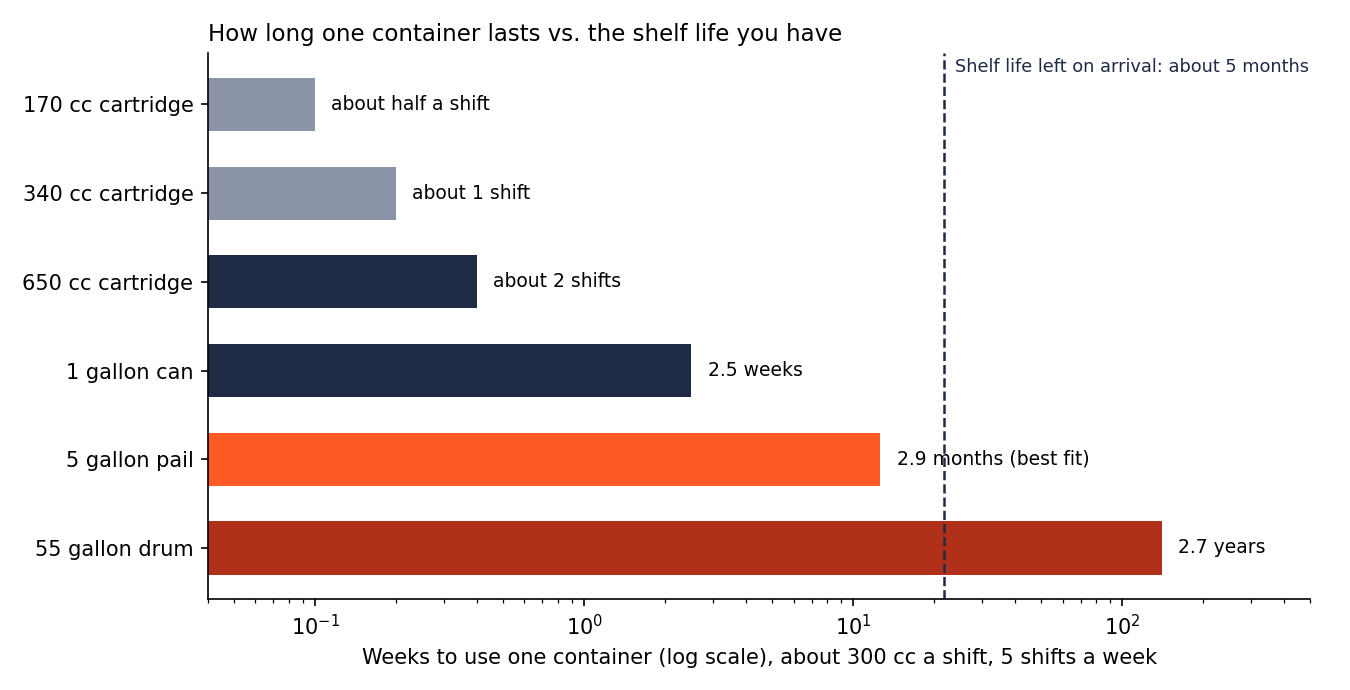
Take the line from the story above: about 300 cc a shift (0.625 cc a part, 60 parts an hour, one 8-hour shift), five days a week. The material has a six-month shelf life and about a month of it is gone by the time it arrives, so there are five months left to use it.
| Container | Usable volume | Lasts about | Sizing tool result |
|---|---|---|---|
| 170 cc cartridge | 170 ml | about half a shift | 2 changes a shift |
| 340 cc cartridge | 340 ml | about 1 shift | 1 change a shift |
| 650 cc cartridge | 650 ml | about 2 shifts | Good fit |
| 1 gallon can | 3.8 L | 2.5 weeks | Good fit |
| 5 gallon pail | 18.9 L | 2.9 months | Best fit: fewest changes, used inside the shelf life |
| 55 gallon drum | 208 L | 2.7 years | Expires before it's used |
Container volumes are nominal. Cartridge times are production time on the line.
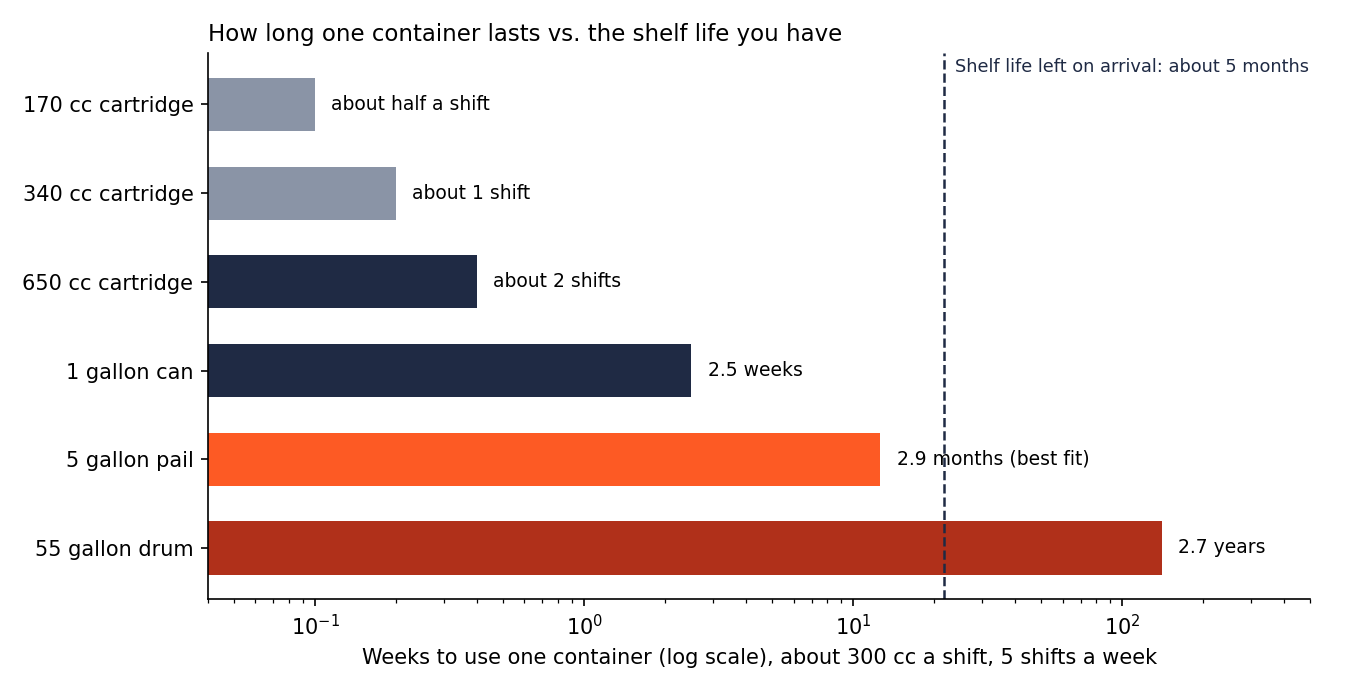 Caption: Time to use one container at about 300 cc a shift, five shifts a week. The dashed line is the shelf life left on arrival. The drum is the only container that runs past it.
The 55 gallon drum fails on shelf life: most of it expires before it is used. At the other end, small cartridges mean changing containers once or twice every shift. For this line the 5 gallon pail is the best fit. It lasts about three months, well inside the five months of shelf life left, with the fewest changeovers. The 1 gallon can also works if you would rather keep less material on hand.
Our Container Sizing Tool does this math for you. Describe your part (bead, ribbon, dots, potting) or enter the amount per part, then your parts per hour, shifts and the shelf life of the material. It shows how long each container lasts, how often you will change it, and which one is the best fit, for 1K or for 2K on a meter. The Dispense Volume Calculator is built in as the first step.
A Note on Heavy, Filled Materials
Highly filled materials such as thermal gap fillers can have a specific gravity of 2.5 to 3.0. A full 5 gallon pail of that material would be too heavy to handle safely, so suppliers often fill pails only about a third of the way.
Size by the volume actually in the container, not the size printed on it. A "5 gallon" pail of gap filler may hold closer to 6 liters, which changes both how long it lasts and how often you change it. The sizing tool has a fill level setting for pails and drums, so you can enter what your supplier actually ships.
Container Formats and When to Use Each
Different dispensing applications call for different container formats. The main options for most industrial dispensing systems are:
-
50 ml / 55 ml cartridges — Low-volume R&D, lab use, short production runs. Convenient but high changeover frequency. Use when volumes are genuinely small.
-
300 ml / 310 ml cartridges — Mid-volume production with manual or automated cartridge dispensers. Larger 600 ml to 1 liter cartridges extend the time between changes.
-
2K side-by-side cartridges — Two-component materials in pre-ratioed cartridges, commonly 50 ml, 200 ml and 400 ml. Choose the size with the same consumption calculation.
-
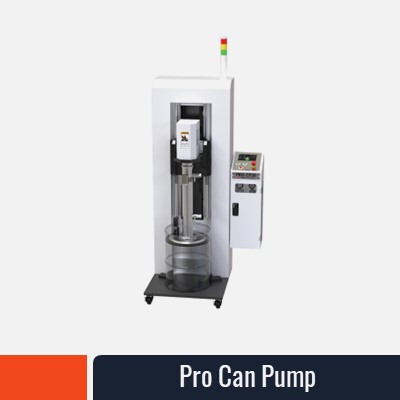
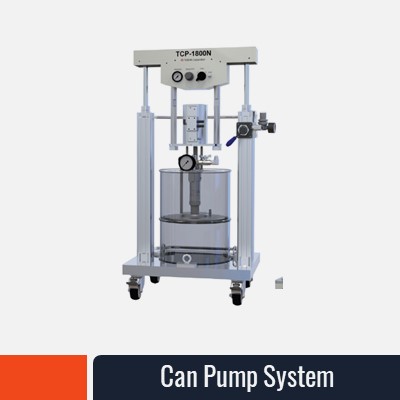
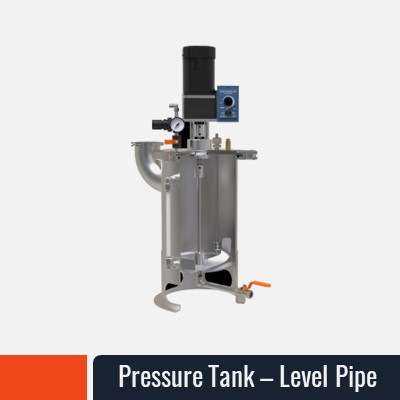
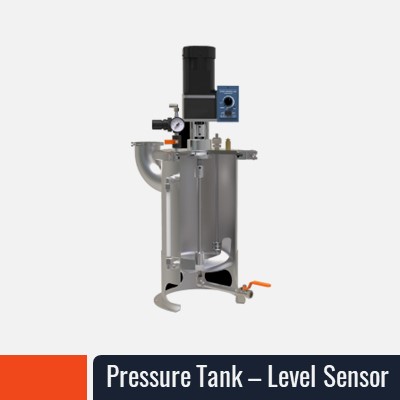
1 gallon / 4 liter cans — Fed by a pressure pot or a can pump. Low changeover frequency for moderate volumes, and a common right answer for expensive materials.
-
5 gallon / 20 liter pails — With a follow plate and pump, for continuous production. Well suited to filled and high-viscosity materials.
-
55 gallon / 208 liter drums — For genuinely high-volume, continuous production only. Check the shelf life math before specifying one.
Your container can also change as you grow. Many jobs start in the lab with 300 ml cartridges. With the right pump, the same metering system can later be fed from pails without changing the process.
The container format and size should match your production reality, not the price per kilo or the convenience of what is in stock.
Frequently Asked Questions
What happens if I use an oversized container and do not finish it?
If the material's shelf life expires before you use the remaining contents, the material must be discarded. For most materials, there is no way to safely extend shelf life once the container has been opened. Some materials show visible signs of degradation — viscosity change, separation, color shift — before the expiry date, but not all do. Track the open date on every container and dispose of any material that has exceeded the manufacturer's stated shelf life.
How does air enter the system during container changes?
During a container swap, the fluid path between the old container and the first dispense of the new one is briefly exposed to atmosphere. Air that enters at the connection point or inside the cartridge tip can travel downstream into the valve, mixing element, or dispensed material. Good changeover procedure — slow re-pressurization, a purge shot before returning to production — minimizes but does not eliminate this risk. Fewer changeovers is the most reliable fix.
Do 2K mix ratios affect container size selection?
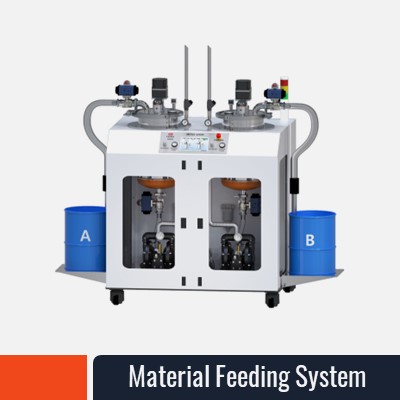
Yes. Size each container to its share of the ratio, so that both run out at about the same time. On a 1:1 material, the A and B containers empty together. On a 10:1 material, the larger side uses ten times as much, so its container should be ten times larger or changed ten times as often. Side-by-side 2K cartridges are already sized to the ratio. For separate A and B pails or drums, size each one so that both are used within the shelf life.
Can I store an opened container for the next shift?
It depends on the material. Single-component materials in sealed pressure pots can often be stored overnight or across shifts, provided the pot is properly sealed and depressurized. Two-component materials left in a static mixer should be purged or the mixer replaced before storing. Always consult the material data sheet for specific idle-time and reuse guidance.
The Bottom Line
Getting container size right from the start avoids two of the most common and avoidable dispensing problems: material waste from over-buying and air ingestion from over-changing. The decision is straightforward once you know your actual consumption rate and the shelf life you really have.
Use the Dispense Robotics Container Sizing Tool to find the right container for your process — or contact us if you would like help sizing a complete dispensing system for your application.
Once you know the container, use our pump configurator to spec the pump that feeds it.
Gavin Petersen of Dispense Robotics has spent 30+ years in industrial fluid dispensing, including senior roles at Graco. He works directly with manufacturing engineers to design and commission dispensing systems for their processes.