

Adhesive Dispensing Systems: How to Choose the Right Equipment | Dispense Robotics
Choosing the wrong adhesive dispensing system costs more than the equipment itself. You're looking at rework, scrap, line downtime while you sort out a swap, and in tight-tolerance applications — electronics, medical devices, EV battery assembly — potential product failures in the field. The equipment decision isn't complicated, but it must start with the right questions. This post walks through the variables that drive system selection: material type, viscosity, shot size, and whether your process is 1K or 2K.
1K vs. 2K: The First Decision
Before you look at any specific dispenser, establish whether you're working with a one-component (1K) or two-component (2K) material.
1K systems handle pre-mixed adhesives — silicones, cyanoacrylates, UV-curables, single-part epoxies. The dispenser's job is to meter and apply at the right rate without introducing air or allowing drips between shots. Most progressive cavity pump systems handle 1K.
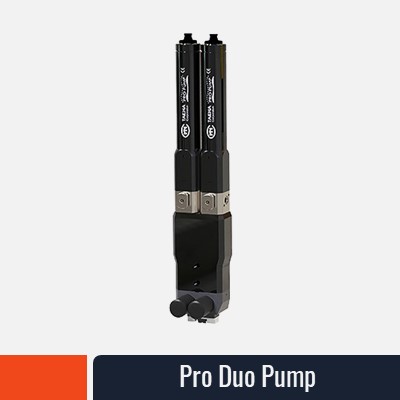
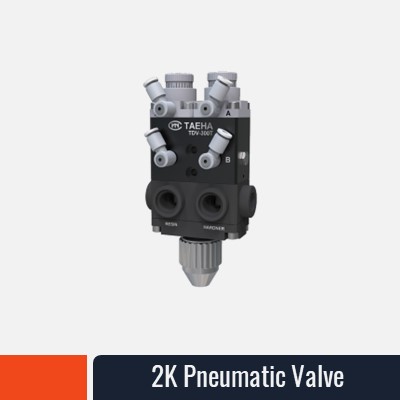
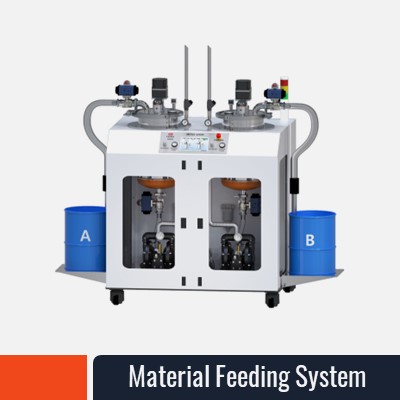
2K systems mix two components — resin and hardener — immediately before dispensing. Ratio accuracy is critical here. Even a small deviation in mix ratio (3–5%) can compromise cure and adhesion strength. That's why 2K systems use dedicated metering and mixing hardware rather than pre-mixing the material upstream.
If you're running a 2K material and trying to save money with a simpler 1K setup, you'll pay for it downstream.
Dispense-Only vs. Meter-Mix-Dispense
Within 1K systems, the next decision is whether you need metering at all.
Dispense-only units move material from a container to an outlet — pressure or mechanical push with no volumetric feedback. These work for applications where bead consistency isn't critical, cycle times are slow, or the operator can make real-time corrections. Manual syringe dispensers and basic pneumatic units fall here.
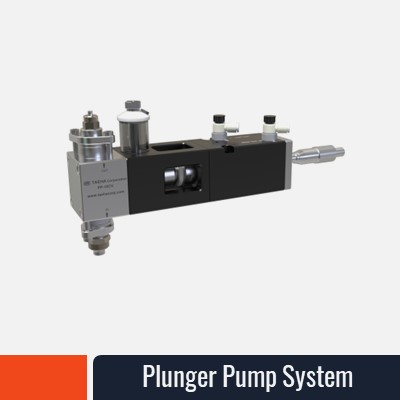
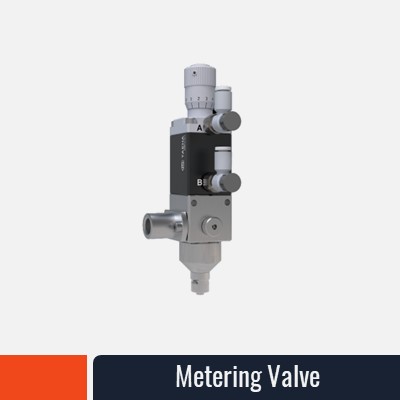
Meter-Mix-Dispense (MMD) systems control shot size by volume. They're slower and more expensive than simple dispense units, but for any application where repeatability matters — bonding, sealing, potting, underfill — they're the only way to hold tolerance across thousands of shots per shift.
The question to ask: what's the cost of a bad shot? If one bad dispense scraps a $0.15 component, dispense-only may be fine. If it scraps a $200 PCB or triggers a rework cycle, you need metering.
Viscosity Is the Spec That Drives Everything Else
Low-viscosity materials (water to about 500 cP) flow under minimal pressure and will drip between shots if not actively controlled. Suck-back valves or needle-seat valves are essential.
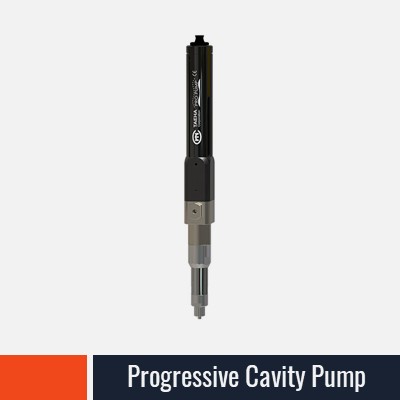
Mid-viscosity materials (500–50,000 cP) — typical for structural adhesives, silicones, and many sealants — are the core operating range for progressive cavity pump systems. PCPs generate consistent flow independent of back pressure, which makes them well-suited for materials that change viscosity with temperature or shear rate.
High-viscosity pastes and greases (50,000 cP and above) need positive displacement — gear pumps or piston systems — and typically require a heated hose between the feed system and dispense head to maintain workable consistency.
Knowing your material's viscosity range at operating temperature isn't optional — it's the first spec you need before any equipment conversation.
Shot Size and Cycle Rate
Shot size determines your metering resolution. If you're dispensing 2–5 mg of underfill per component at 3,000 components per shift, you need a micro-dispensing system with tight volumetric control and fast cycle rates. If you're applying a 6-inch bead of structural adhesive to a panel twice a minute, almost any gear-pump system will get there.
Common mistake: over-specifying for the peak demand case and ending up with a system that's too large to run accurately at the low end of your range. Most meters have a lower accuracy limit — ask the manufacturer what the minimum reliable shot size is for their platform, not just the maximum.
Mounting Configurations
The mounting type follows from the process, not the other way around.
Bench-top / container-mounted: For manual or semi-automated stations. Operator controls shot size through foot pedal or timer. Works for low-volume, flexible operations.
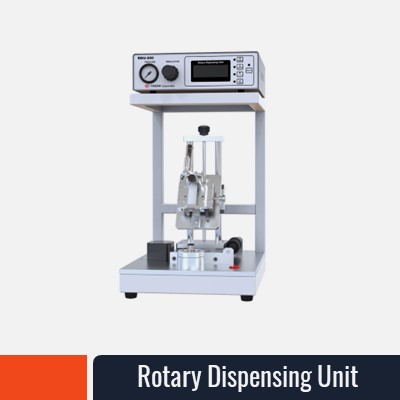
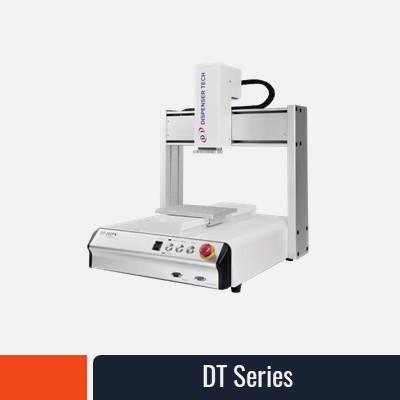
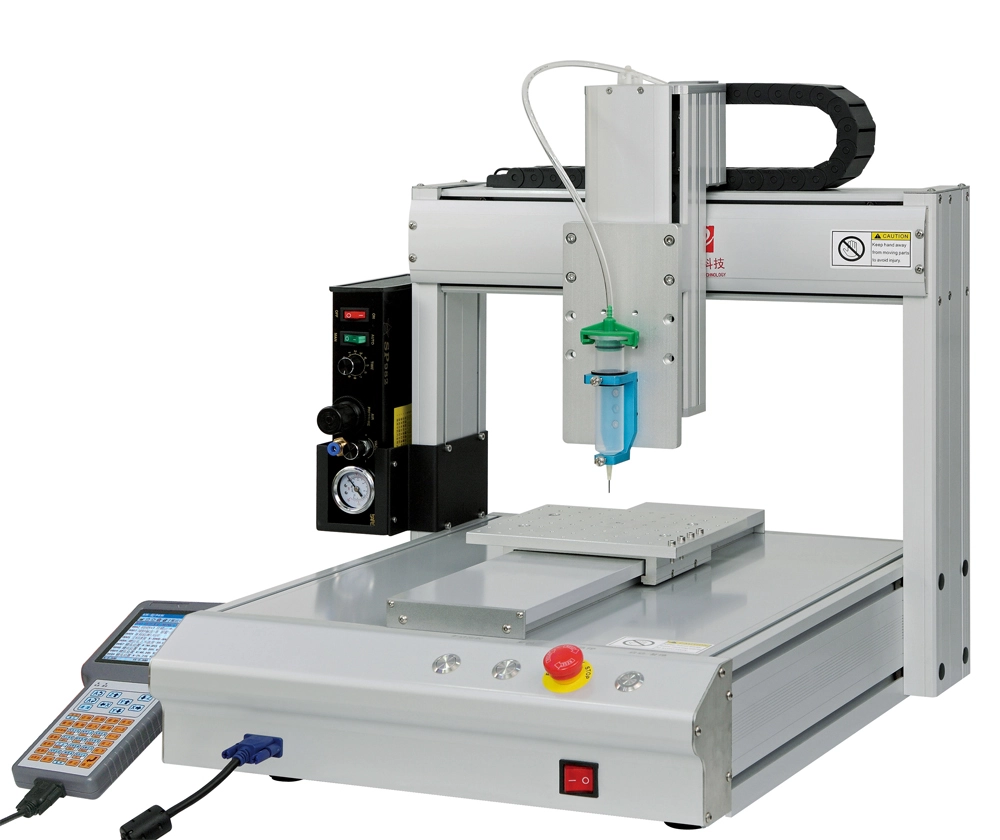
Machine-mounted: Integrated into automation cells or dispensing robots. The dispenser head mounts to a Z-axis, gantry, or robot arm and moves through programmed patterns. This is where you get the repeatability a manual station can't deliver.
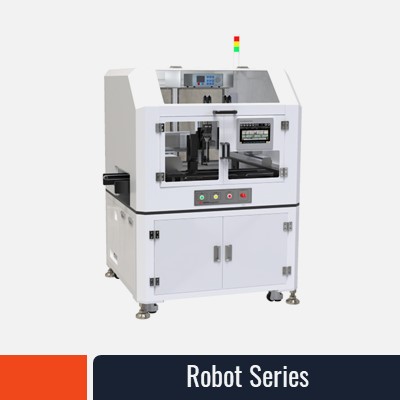
Robotic dispensing: For complex bead geometries, tight tolerances, or high-volume production. The robot handles path execution; the dispenser handles material delivery. The two have to be matched — a fast robot moving through a tight pattern with an underpowered feed system will show up as inconsistent bead width. When you combine a precision dispenser with a motion platform, you get a full adhesive dispensing robot — a production cell that handles path programming, material application, and repeatability without operator input.
The Drip Problem — and How to Eliminate It
Between shots, air pressure in pneumatic systems will push material to the tip and cause dripping. On electronics and precision assemblies, one unwanted drip can mean a rejection.
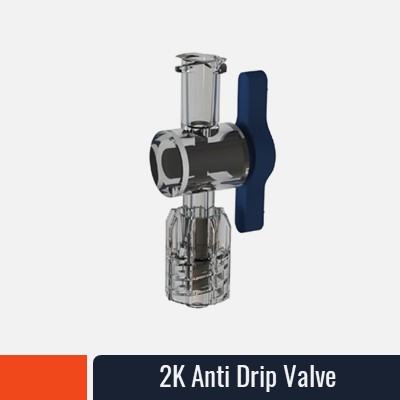
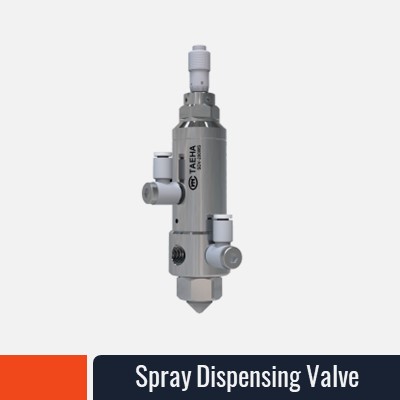
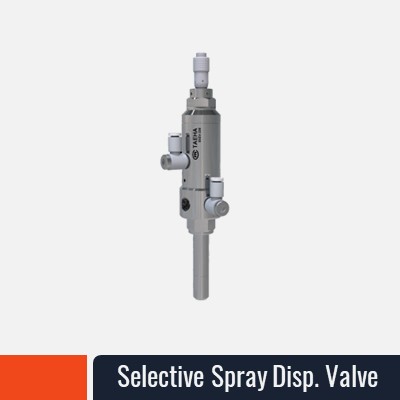
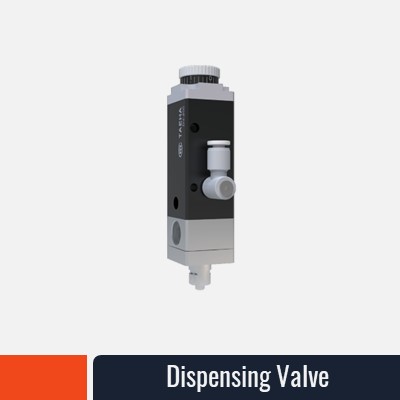
An anti-drip valve actively relieves pressure at the tip between dispense cycles, preventing post-dispense ooze. If your current setup is leaving tails or spots between shots, this is usually the fix before you start re-engineering the process.
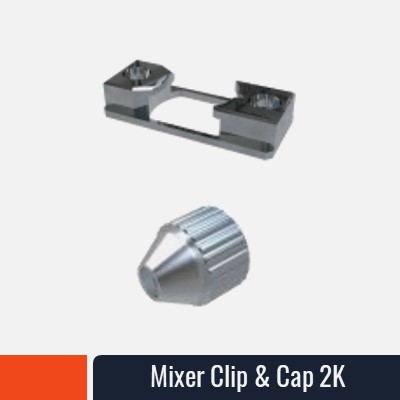
For 2K systems running reactive materials, the needle or tip also needs to be purged regularly — the mix front will cure in the static mixer if the line sits idle.
Progressive Cavity Pumps vs. Gear Pumps
For mid-viscosity 1K materials, these are the two main options.
Gear pumps move material by trapping it between meshing gear teeth. They're fast and compact, but sensitive to viscosity changes — if the material thins out with heat or shear, the gear pump will over-dispense.
Progressive cavity pumps use a helical rotor inside a stator to generate consistent flow regardless of back pressure or viscosity fluctuation. For materials that change behaviour across the shift — filled adhesives, thixotropic sealants, moisture-sensitive materials that degrade in the pot — PCPs give you the consistency that keeps reject rates low.
If you're running a filled adhesive or a material with variable viscosity, a PCP system is worth the additional cost.
Hot Melt: A Different Category
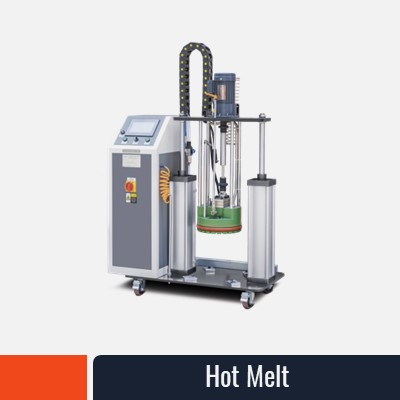
Hot melt adhesive dispensing operates at elevated temperatures (120–200°C for most hot melt EVA formulations) and doesn't fit neatly into the 1K/2K framework above. The material is solid at room temperature and becomes fluid when heated — which means your feed, hose, valve, and tip all need to be temperature-controlled.
Hot melt is well-suited for packaging, bookbinding, textiles, and foam bonding where open time is short and bond strength requirements are moderate. For structural or precision bonding in electronics and automotive, reactive systems (1K or 2K epoxies and polyurethanes) are more common.
Match the System to the Process
The spec that most people get wrong is buying a system for what they're dispensing today, not for what they'll be running in 18 months as volumes scale or materials change.
If you're evaluating a dispensing system and want to work through the viscosity, shot size, and mounting requirements for your specific application, the pump configurator will give you a starting point — or contact us directly if your process is outside standard parameters.
Gavin Petersen has spent 30+ years in industrial fluid dispensing, including senior roles at Graco. He works directly with manufacturing engineers to select dispensing automation matched to their process requirements.