

Micro Dispensing Systems: Nanoliter-to-Microliter Guide
Introduction
Manual fluid dispensing in electronics assembly, medical device manufacturing, and biotech production creates three persistent problems: inconsistent drop volumes lead to rework and scrap, operator fatigue drives human error, and material waste inflates production costs. A single misobond or under-filled solder joint in a smartphone's BGA package can cascade through quality assurance—and a single failed diagnostic test due to imprecise reagent placement wastes both time and consumables.
A micro dispensing system automates fluid application from 1 nanoliter to 100 microliters, holding ±1–3% shot-to-shot accuracy — a range no operator can hit by hand. Two technology families cover that range: contact (needle or auger) systems for viscous fluids above 5,000 cP, and non-contact (piezo or acoustic jetting) systems for fluids under 500 cP that need speed and zero surface contact. The right choice comes down to your fluid's viscosity and your throughput target, covered below.
This guide walks you through how micro dispensing systems work, which technologies suit which applications, and how to select the right system for your production challenges.
What Is a Micro Dispensing System?
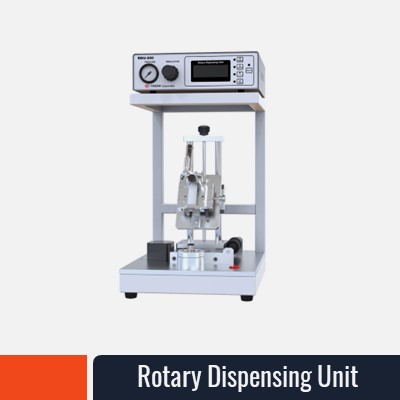
A micro dispensing system is an automated apparatus that applies minute quantities of fluid—typically between 1 nanoliter (nL) and 100 microliters (µL)—onto a substrate with high repeatability and positional accuracy. Unlike bulk dispensing systems designed for milliliter-scale application, micro dispensing handles fluid volumes that manual human hands cannot reliably control.
Key characteristics:
- Volume precision: Accuracies of ±1% to ±5% across shot-to-shot variation
- Substrate compatibility: Works on PCBs, silicon wafers, microplates, molded parts, and flexible films
- Fluid viscosity range: From low-viscosity solvents (1 cP) to high-viscosity adhesives (100,000+ cP)
- Positional accuracy: XYZ placement within ±0.5 mm to ±0.05 mm depending on system caliber
- Repeatability: Thousands of shots per shift with minimal operator intervention
Micro dispensing differs fundamentally from standard industrial dispensing in three ways:
- Resolution: Standard systems dispense drops measured in tens of microliters; micro dispensing handles sub-microliter precision.
- Speed-to-accuracy ratio: Micro systems must balance fast cycle times (shots per second) with sub-microliter repeatability—a tighter constraint than bulk dispensing.
- Control architecture: Micro systems rely on closed-loop feedback (vision, pressure sensing, valve actuation timing) rather than manual hand-eye coordination.
How Does Micro Dispensing Work?
Micro dispensing systems split into two broad categories: contact dispensing and non-contact dispensing. The choice between them drives material compatibility, speed, and precision trade-offs.
Contact Dispensing (Needle/Nozzle Method)
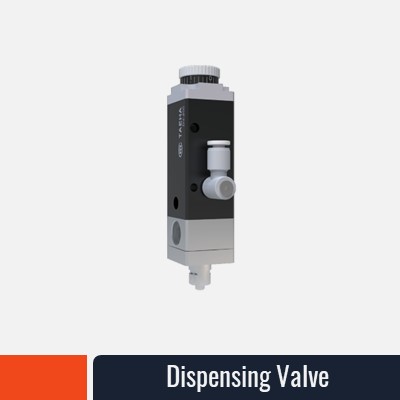
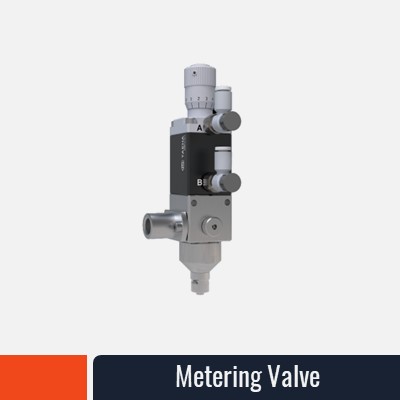
Contact dispensing presses a fine needle or nozzle against the substrate and applies pressure or actuation to eject a measured droplet. The needle makes physical contact with the surface.
Mechanics:
- A syringe pump or piston valve draws fluid into a chamber, then advances a plunger or solenoid to force a precise volume through the needle tip.
- Needle gauges range from 25G (0.5 mm ID) to 34G (0.15 mm ID), limiting drop size by orifice geometry.
- Dwell time (contact between needle tip and substrate) influences drop adhesion and shape, critical for adhesive bond lines.
- Needle wear from repeated contact with abrasive surfaces or high-viscosity fluids necessitates regular maintenance or tip replacement.
Advantages:
- Works with high-viscosity fluids (adhesives, pastes, encapsulants) without atomization.
- Delivers larger drops (5–100 µL per shot) with stable geometry.
- Lower system cost than jetting alternatives.
Disadvantages:
- Needle contact can damage delicate surfaces or contaminate high-cleanliness areas (semiconductor cleanrooms).
- Slow cycle times (~1–5 shots per second) due to dwell and retract.
- Potential for fiber shedding or needle fragments on high-speed repeat cycles.
Non-Contact Dispensing (Jetting Method)
Non-contact jetting accelerates a fluid column through an orifice without touching the substrate, using acoustic or piezoelectric energy to form and eject droplets in flight.
Mechanics:
- A piezoelectric actuator (or acoustic transducer) imparts a pressure pulse to a fluid chamber.
- The pulse shape and duration determine droplet size, velocity, and trajectory.
- Droplet sizes range from 5 nL to 50 µL per jet, depending on orifice size (12–80 µm) and actuation amplitude.
- Actuation frequencies of 4–20 kHz allow up to 20+ shots per second per nozzle.
- Fluid must possess minimal surface-tension variation and controlled viscosity to jet reliably; thickening agents or additives can destabilize jetting.
Advantages:
- Non-contact eliminates surface damage and cross-contamination risk.
- High speed: 5–20 shots per second per nozzle, enabling fast cycle times.
- Nano-scale precision: sub-microliter drops with ±2–3% repeatability.
- Multi-channel capability: arrays of nozzles can jet in parallel, ideal for high-throughput lab automation.
Disadvantages:
- Fluid viscosity limits jetting to ≤ 500 cP in most systems; cannot reliably jet high-viscosity adhesives.
- Droplet velocity and trajectory sensitive to ambient temperature, air pressure, and dust contamination.
- Higher capital cost ($250k–$500k+ for production systems) versus contact needle dispensing.
- Orifice fouling from particulates or fluid residue requires periodic cleaning or replacement.
Micro Dispensing Technologies Compared
| Technology | Volume Range | Speed | Viscosity Limit | Contact? | Best For | Cost Tier |
|---|---|---|---|---|---|---|
| Needle/Syringe Pump | 5–100 µL | 1–5 shots/sec | 50,000+ cP | Yes | Adhesives, pastes, encapsulants; lower throughput | Low–Mid |
| Screw/Auger Valve | 1–50 µL | 2–10 shots/sec | 100,000+ cP | Yes | Viscous underfill, solder paste; controlled extrusion | Mid |
| Solenoid Pinch Valve | 2–50 µL | 5–15 shots/sec | 5,000 cP | Yes | Oils, solvents, thin adhesives; fast medium-volume | Low–Mid |
| Piezo Jetting | 5 nL–50 µL | 5–20+ shots/sec | 50–500 cP | No | Diagnostics, assays, reagents; high speed, precision | High |
| Acoustic/Bubble Jetting | 10 nL–20 µL | 10–40 kHz | 1–100 cP | No | Low-viscosity fluids, pharmaceuticals, genomics | High |
| Pick-and-Place Valve | 50–500 µL | 1–2 shots/sec | 50,000+ cP | Yes | Large, discrete droplets; encapsulation, potting | Mid |
Decision framework:
- Needle dispensing: Choose for > 5,000 cP fluids, cost-sensitive production, or where contact is acceptable.
- Jetting: Choose for high speed, nano-scale precision, non-contact requirement, or assay/diagnostic workflows.
- Auger/screw valves: Choose for ultra-high viscosity (encapsulants, potting compounds) with moderate speed.
- Solenoid pinch: Choose for fast medium-viscosity application and simple integration.
Key Applications of Micro Dispensing Systems
Electronics Assembly & PCB Manufacturing
Underfill for BGA packages: Flip-chip BGAs require precise underfill application in the gap between die and PCB (typically 50–200 µm). Needle dispensing deposits 10–50 µL of epoxy underfill around the perimeter; capillary action wicks it beneath the die. Manual application risks voids, squeeze-out, and rework.
Solder-paste application: Micro dispensing applies tacky solder paste in exact patterns for fine-pitch (0.4 mm) SMT components. Screw valves or auger systems extrude 5–20 µL dots with minimal slump. This competes with stencil printing for non-stencil-friendly geometries (selective solder, fine-pitch hand-soldered areas).
Adhesive bond-lining: Ultra-thin structural adhesive bonds on small components require 1–5 µL lines. Needle systems deliver anaerobic or epoxy adhesives with microliter precision, eliminating over-cure issues from excess material.
Medical Device & Diagnostic Manufacturing
Point-of-care diagnostics: Lab-on-chip and microfluidic cartridges demand precise reagent placement. Piezo jetting systems dispense 5–100 nL of enzyme, antibody, or dye reagent into wells or channels with ±3% accuracy and zero cross-contamination. A single diagnostic device may contain 50+ discrete reagent spots, each requiring sub-microliter precision.
Drug delivery devices: Pre-filled syringes and autoinjectors require exact viscous drug formulation in assembly. Needle or auger dispensing applies 5–50 µL of biopharmaceutical with high repeatability, critical for dose consistency.
Medical adhesive assembly: Bone-conduction hearing aids, intraocular lenses, and vascular grafts require biocompatible adhesives in microliter quantities. Contact dispensing allows visual confirmation of bond-line coverage before cure.
Biotech & Life Science Automation
Assay preparation: High-throughput screening platforms automate reagent addition to 384- or 1536-well microplates. Piezo jetting systems dispense 50–200 nL per well across entire plates at 5–10 shots per second per nozzle. A single nozzle handles several thousand wells per hour; multi-nozzle heads handle more.
Sample normalization: Liquid handlers dispense exact sample volumes (1–50 µL) for downstream PCR, HPLC, or mass spectrometry. Repeatability ±2–3% ensures statistical validity across replicates.
Cell/tissue culture prep: Precise nutrient or growth-factor application in organ-on-chip devices requires sub-microliter jetting. Acoustic jetting minimizes fluid shear, preserving cell viability.
Semiconductor Manufacturing
Die attach: Under-bump-metallurgy (UBM) deposition on wafer bumps requires 1–10 µL of solder or conductive adhesive per bump. Precision placement ensures reliable electrical and mechanical bonds. Auger systems handle the viscosity; speed targets 2–4 bumps per second.
Encapsulation & underfill: Glob-top epoxy or liquid encapsulation protects die and wirebonds. Dispensing systems apply exact perimeter doses (50–200 µL) while avoiding wirebond damage and minimizing flash. Automated systems replace manual pot-and-squirt methods, improving consistency and reducing rework.
Flux application: Selective flux placement on SMT pads and wirebond areas prevents solder bridges. Needle or solenoid systems apply 2–10 µL flux dots with spatial precision.
Benefits of Automating Micro Dispensing
Volume Accuracy and Consistency
Manual hand dispensing varies from shot to shot; operator fatigue and surface-tension drift compound error. Automated micro dispensing systems achieve ±1–3% accuracy, translating directly to:
- Reduced rework: Fewer over/under-filled bonds, fewer solder bridges, fewer void-containing underfills.
- Yield improvement: fewer parts rejected for too much or too little material.
- Process validation: Repeatable, data-logged dispenses simplify process validation and FDA/ISO 13485 traceability requirements.
Material Waste Reduction
Manual dispensing wastes material through dropped globs, over-application, and operator error. Closed-loop automated systems:
- Apply exact doses, so there is less adhesive overshoot.
- Eliminate splatter and rework cleanup.
- Lower cost-per-assembly by reducing material consumption.
Example: A medical device manufacturer dispensing cyanoacrylate adhesive at $100/mL and manually wasting 15% of 2 mL per device. Switching to automated micro dispensing (2% waste) saves $2.90 per device. At 100k units/year, that's $290k annual material cost avoidance.
Speed and Throughput
- Needle dispensing: 1–5 shots/second → 720–3,600 assemblies/hour (single-head systems).
- Jetting systems: 5–20 shots/second per nozzle; multi-channel arrays achieve 10,000+ spots/hour for diagnostics.
This speed advantage enables small-batch, mixed-SKU production without line changeover downtime.
Operator Safety and Consistency
Removing manual adhesive/solvent handling reduces:
- Occupational exposure to volatile organics (VOCs) and skin sensitizers (cyanoacrylates, epoxies).
- Repetitive-strain injury from hand-squeezing or repetitive pipetting.
- Operator variability—the system performs identically across shifts and personnel.
Traceability and Process Control
Modern micro dispensing systems log:
- Dispense timestamp, volume, position, pressure, and valve actuation time.
- Temperature and humidity conditions.
- Valve cycle count for predictive maintenance.
This data feeds SPC (statistical process control) and links to QMS/MES systems for full traceability—essential for medical devices and semiconductors.
How to Choose the Right Micro Dispensing System
Selecting the right system requires balancing six criteria:
1. Fluid Viscosity and Chemistry
Action: Measure or obtain viscosity data (cP) for your primary fluid. Identify viscosity range across temperature.
- 1–50 cP: Low-viscosity solvents, reagents, oils. Piezo jetting and solenoid pinch valves excel.
- 50–1,000 cP: Light adhesives, inks, coatings. Needle dispensing or small-orifice jetting.
- 1,000–10,000 cP: Thick adhesives, pastes, underfill. Contact needle or auger systems only.
- >10,000 cP: Ultra-thick encapsulants, potting compounds. Screw/auger or hand dispensing.
Chemical compatibility matters: UV-cure resins, cyanoacrylates, and epoxies may degrade certain elastomers or metals in contact paths. Verify component materials with the system vendor.
2. Drop Volume and Precision Requirements
Action: Define minimum drop size and accuracy tolerance.
- Sub-microliter precision (5–100 nL): Piezo jetting; diagnostics, assays.
- Microliter range (1–100 µL): Needle or screw dispensing; adhesives, adhesive bond lines.
- Large discrete drops (100–500 µL): Pick-and-place or pinch valve; encapsulation.
Tighter tolerance (±1% vs. ±5%) demands closed-loop feedback (pressure, vision, or time-weighted metering).
3. Substrate and Assembly Environment
Action: Consider substrate material, topography, and contact risk.
- Bare PCB or rigid substrates: Contact dispensing acceptable; surface protection not critical.
- Fine-pitch SMT or flex circuits: Non-contact jetting preferred; needle contact risks short circuits or component displacement.
- Cleanroom or high-cleanliness area: Non-contact jetting avoids particle shedding from needle wear.
- Curved or molded parts: Vision-guided needle systems handle topography; jetting requires flat or near-flat surfaces.
4. Speed and Throughput Requirements
Action: Calculate shots per minute needed; determine single-head vs. multi-head strategy.
- < 10 assemblies/minute: Single-head needle system (low cost, flexible).
- 10–100 assemblies/minute: Single-head jetting or multi-head needle array.
- > 100 assemblies/minute: Multi-channel jetting or array of needle systems.
Example: A diagnostic manufacturer runs 200-well assays at 1 assay per minute. A single-nozzle jetting system at 10 shots/second requires 200 seconds per assay (3.3 min)—too slow. An 8-channel jetting head at 10 shots/second per nozzle dispenses all 200 wells in ~25 seconds, meeting throughput.
5. Budget and Total Cost of Ownership (TCO)
Action: Request quotes and calculate 5-year TCO, including consumables and maintenance.
- Entry-level contact dispensing: $50k–$150k hardware + $5k–$10k/year consumables/maintenance.
- Production jetting system: $250k–$500k hardware + $15k–$30k/year consumables/service.
- High-throughput platform: $500k–$2M+ hardware + $50k+/year service and module replacement.
Break-even analysis: Labor cost avoidance + yield/scrap reduction + material savings often justify investment within 18–36 months.
6. Integration and Support
Action: Evaluate vendor ecosystem, spare-parts availability, and local service.
- Does the vendor offer plug-and-play integration to your assembly line (vision, robotics interface)?
- Are consumables (needles, nozzles, gaskets) readily available domestically or through local distributors?
- Does the vendor provide on-site training, process optimization support, and emergency response?
Smaller vendors offer flexibility and custom integration; larger suppliers (e.g., established adhesive/automation OEMs) provide broader ecosystem support and faster troubleshooting.
Frequently Asked Questions
What is the difference between jetting and needle dispensing?
Jetting uses piezoelectric or acoustic energy to accelerate droplets through air without touching the substrate; needle dispensing presses a fine tip against the surface and ejects fluid via pressure or piston actuation. Jetting excels at high speed (5–20+ shots/second) and non-contact applications (diagnostics, cleanroom work); needle dispensing handles thick fluids and offers lower capital cost. Jetting precision is ±2–3% at nanoliter scales; needle dispensing is ±1–5% at microliter scales. Choose jetting for speed and cleanliness; choose needle for viscosity and budget.
What volumes can micro dispensing systems handle?
Modern systems range from 1 nanoliter (0.001 µL) with piezo jetting to 500 microliters (0.5 mL) with pick-and-place or large-orifice contact systems. Most production micro dispensing operates between 5 nL and 100 µL. Nanoliter-scale jetting suits diagnostics and assays; microliter-scale needle or auger dispensing handles adhesives and underfill. Volume precision typically improves at mid-range (5–100 µL) where orifice design and actuation timing have tightest control.
What fluids work with micro dispensing?
Almost any fluid dispensable through a small orifice—provided viscosity is managed. Common materials include:
- Low-viscosity: Solvents, oils, aqueous reagents (1–50 cP) → jetting preferred.
- Medium-viscosity: Thin adhesives, inks, flux (50–1,000 cP) → needle or small-orifice systems.
- High-viscosity: Epoxy underfill, solder paste, cyanoacrylate, potting compounds (1,000–100,000+ cP) → contact needle or auger.
- Specialty fluids: Silicones, polyurethanes, UV-cure resins, biocompatible adhesives (epoxy, cyanoacrylate for medical assemblies).
Verify fluid compatibility with system seals, gaskets, and needle/nozzle materials. Temperature stability and shelf-life of the dispensed material matter; some adhesives cure faster in thin layers, affecting process timing.
How do I ensure repeatability and traceability in micro dispensing?
Modern systems employ:
- Closed-loop metering: Pressure-feedback control or time-weighted dispense cycles ensure consistent volume independent of ambient conditions.
- Vision inspection: Post-dispense imaging confirms bead size, placement, and absence of voids (common in underfill QA).
- Data logging: Every dispense event is timestamped with volume, position, temperature, and pressure. Integration with MES/QMS provides full traceability for ISO 13485 and FDA 21 CFR Part 11 compliance.
- Preventive maintenance: Tracking valve cycle counts, needle wear, and nozzle fouling enables predictive replacement before precision drift.
Conclusion
Micro dispensing systems have evolved from niche laboratory tools to production-critical automation in electronics, medical devices, biotech, and semiconductors. By replacing manual fluid application with automated precision, these systems deliver consistent ±1–3% volume accuracy, reduce material waste, accelerate assembly cycles to hundreds per hour, and provide full traceability for regulated industries.
The choice between contact (needle) and non-contact (jetting) technologies hinges on fluid viscosity, speed requirements, substrate sensitivity, and budget. A medical device maker dispensing cyanoacrylate will select different hardware than a diagnostics lab running reagent assays—yet both rely on the same precision-metering principle.
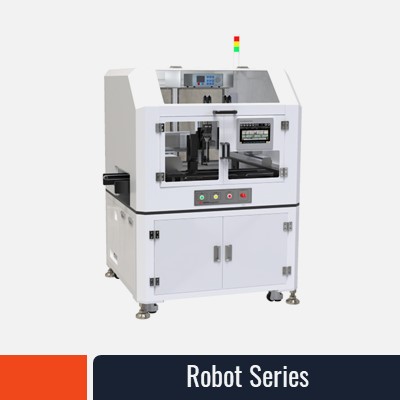
If manual hand dispensing is creating rework, waste, or traceability gaps in your process, a pilot evaluation of a micro dispensing system often pays back its investment within 18–36 months through labor, material, and scrap savings alone. For higher-volume applications where dispensing volumes move beyond the micro range, adhesive dispensing robots handle the motion system and larger-format bond work.
Ready to explore micro dispensing for your operation? Micro Dispensing Systems product page or contact Dispense Robotics to discuss your application and receive a process evaluation.
Further Reading
- IPC-7711/7721 standard for rework and repair of electronics assemblies (relevant for underfill and adhesive dispensing QA).
- adhesive dispensing robots post for deeper dive into adhesive automation strategies.
- Explore Dispense Robotics catalog for system specifications.